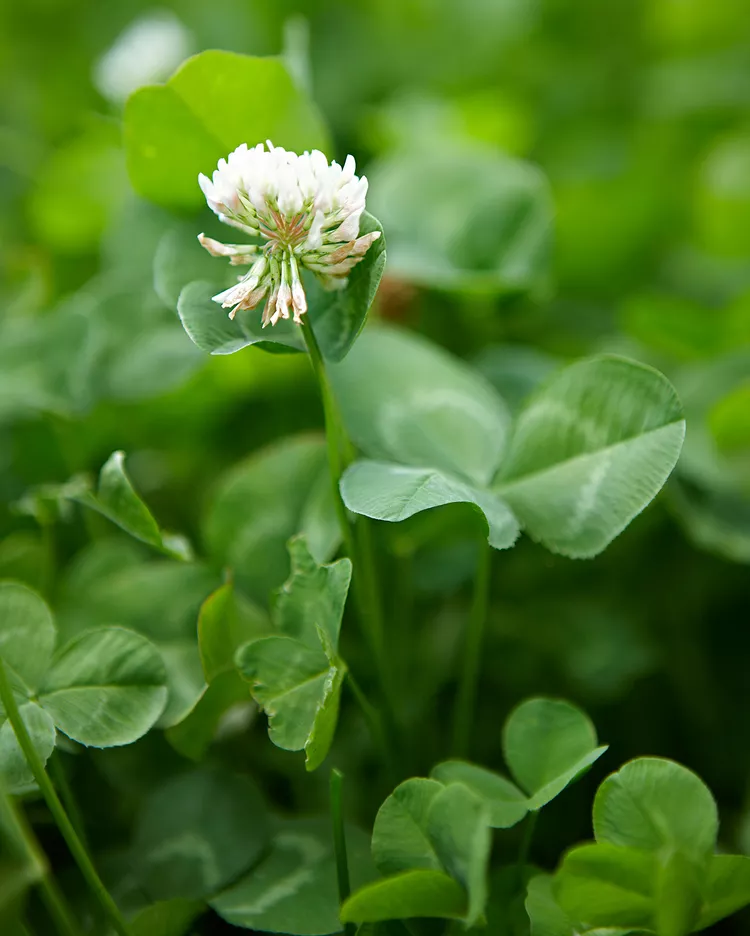
White clover is a fierce competitor of turfgrass. This tenacious perennial hugs the ground, effectively evading a mower deck. Harvesting nitrogen from the atmosphere and transforming it into a usable plant-friendly form, white clover grows well and even thrives in poor soil where traditional turfgrasses fail to gain traction due to lack of nitrogen. White clover also has notable cold hardiness; severe winter rarely sets it back. Sideline its spread with our five essential tips for how to get rid of clover in lawns.
1. Start with a Healthy Lawn
Here's a secret for how to get rid of clover in lawns that the tenacious plant doesn't want you to know: it can't compete with a thriving stand of turfgrass. In time, a healthy lawn will overpower weeds of all types, including white clover. When growing in good soil and fortified with ample moisture, turfgrass spreads more vigorously than white clover. Turfgrass eliminates white clover by growing into a clover colony, putting up new stems, and reducing clover's ability to capture sunlight. Soon, clover disappears because it can't sustain itself without sunlight.
A healthy lawn begins with good soil. Nutrient-rich, well-drained loam is the foundation of a lush lawn. Adequate moisture is another component. Turfgrass thrives when it receives about 1 inch of water per week from rainfall or irrigation.
Finally, mowing height impacts turfgrass health. Lawn grass is best maintained at about 3 inches tall. Maintaining a lawn at taller or shorter mowing heights promotes thin coverage, potentially opening ground for weed seeds to take root. Warm-season grasses, such as centipedegrass and zoysiagrass, are an exception to this guideline. They grow well at a mowing height of 2 inches.
2. Fortify Your Turf with Nitrogen
Fertilizing your lawn is an effective way to limit clover growth and, in many cases, a method for how to get rid of clover in lawns for good. Generally, lawns with a white clover infestation grow in soil that's low in nitrogen. White clover can harvest nitrogen from the atmosphere to satisfy its growing needs, but turfgrass isn't capable of that feat. Provide nitrogen fertilizer and give the turfgrass the upper hand.
For quick results, apply synthetic nitrogen fertilizer formulated for lawns. Quickly available to plants and easy to apply, synthetic nitrogen fertilizer pellets can harm the environment if not applied properly. Applying too much fertilizer or spreading it near waterways can lead to runoff that destroys native habitats. Follow package directions carefully when applying fertilizer. Synthetic lawn fertilizer can be applied when turf begins growing in spring and again in early fall.
A natural way to boost soil health and available nitrogen is to spread a thin layer of compost over turfgrass in early spring and again in fall. Well-decomposed compost will enrich the soil with many nutrients, in addition to nitrogen, and promote a thriving community of soil microbes. Don't expect a compost-type lawn fertilizer to spur quick turf growth. Natural fertilizers work more slowly than synthetic fertilizers, but the long-term soil improvement they provide is valuable.
3. Wait for Fall If Using Herbicide
Broadleaf herbicides eliminate white clover when applied at the right time. While you might be tempted to take action by applying herbicide in spring or summer when clover is lush and growing rampantly, wait a few months for the best results. University research finds that fall is the most effective time for applying broadleaf herbicides specially formulated for white clover. Maximize white clover control with an herbicide by treating turf when no rain is expected for at least 24 hours after application. Do not mow immediately before or after application. Follow product label directions precisely.
4. Consider the Cost
Treating turf to eradicate white clover has financial and environmental costs. Take both into account when determining a plan of action. Financial costs vary widely depending on whether you make the fertilizer or herbicide applications yourself or hire a lawn care firm to do them for you. If using a service, get a few quotes from reputable providers.
The environmental cost of removing clover from lawns is just as notable. White clover is a food source for a variety of pollinators. Clover controls—synthetic fertilizer and broadleaf herbicide—have the potential to negatively impact the environment through damaging runoff and harmful herbicide overspray.
5. Rethink Your Turf
Is a dense, uniform carpet of turf an essential element for your landscape? If the answer is yes, white clover control is your best way forward. Are you open to the idea of a mixed-species lawn? Bee lawns fall into this category and are made up of a combination of turfgrasses, such as fine fescues and Kentucky bluegrass, along with flowering plants, such as white clover, that can grow at low mowing heights. Mixed-species lawns are diverse and not as neat and tidy as lawns that are exclusively turfgrass. However, they provide many environmental benefits and an inviting, lush gathering space.
6. Embrace Lawn Alternatives
If you're open to a completely different look, you can turn things around and opt to have a clover lawn instead of a turf lawn. A clover lawn will be low-maintenance, and using a microclover variety eliminates the need for mowing altogether. Or consider the very much on-trend idea of meadowscaping. While you'll need to spend time weeding and managing your burgeoning flower field, you'll find that it attracts so many birds and pollinators to your yard that it will be worth the extra effort. A gravel groundcover, artificial turf, or low-maintenance groundcovers are cost-effective and eco-friendly for even easier yard care.
New