Unlike other types of fruit, figs don’t ripen well off the plant. So when are figs ripe and how can you tell when to pick the fruit? There are several clues to look for so that you don't end up with either a hard, bland harvest or overly ripe, mushy fruit. Whether you grow figs in pots or outside in the garden, these harvesting tips will help you pick figs at the perfect time for fresh eating, canning, freezing, or dehydrating.
Factors That Affect When to Harvest Figs
The main fig harvest season usually stretches from July to August. However, different types of figs fruit at different times of the year, and some fig varieties fruit more than once. Figs are divided into early-season, mid-season, and late-season varieties.
Early-season figs can fruit as early as May, while late-season figs fruit in September. To complicate things further, some fig varieties produce an initial harvest early in the season on old wood, known as a breba harvest, followed by a second, main harvest on new growth in summer or fall.
Weather patterns and plant care regimens can also affect how figs ripen, and figs grown indoors can fruit differently than figs kept in the garden or dwarf fig trees. Considering how much fig harvest season can vary, it’s usually best to pick figs when they display sure signs of ripeness and to not rely heavily on the date when fig trees are “supposed” to fruit.
Signs Figs Are Ready for Harvest
Fig trees usually take three to five years to fruit after planting, so you must be patient as you await your bounty of fresh figs. Once the trees begin fruiting, look for these signs to know when figs are ripe and ready to pick:
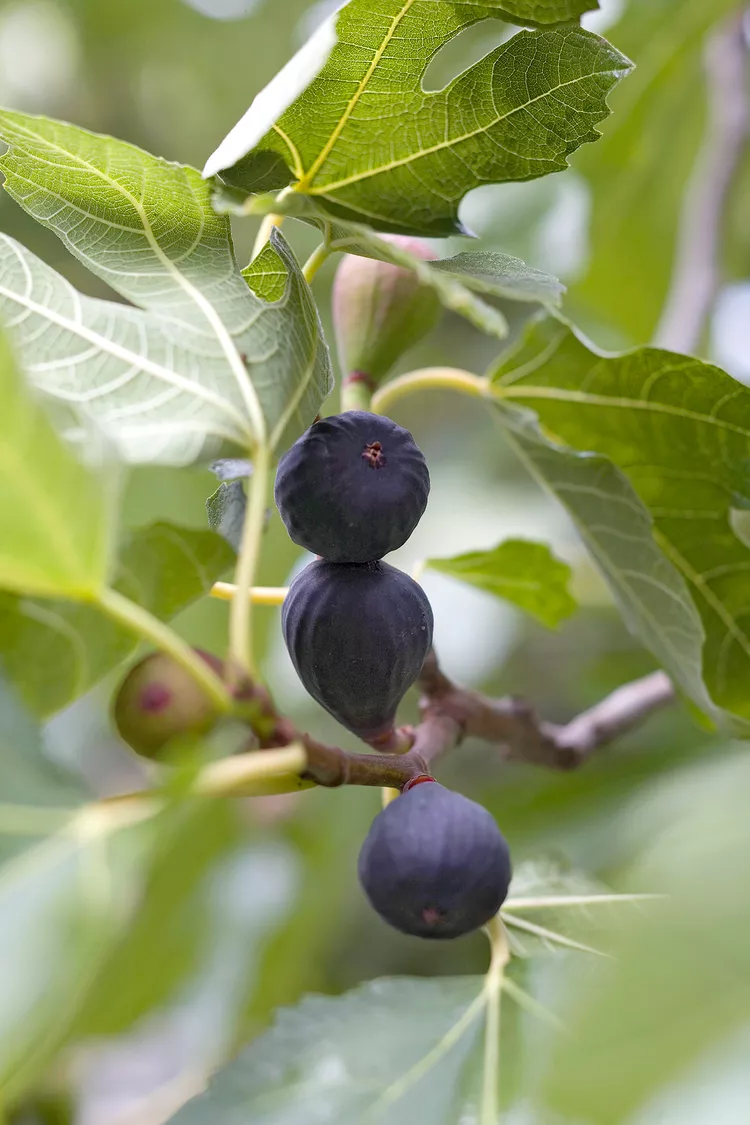
- Deepening color. Fig skins tend to become more saturated in color as the fruit approaches ripeness. Just remember that different types of figs produce different colored fruit, and figs can mature into shades of brown, purple, gold, or even yellowish-green when ripe.
- Soft flesh. Ripe figs should be slightly soft to the touch but not mushy. A good rule of thumb is to pick figs when they’re about as soft as a water balloon.
- Sweet aroma. Your sense of smell can let you know that it’s time to pick figs. Ripe figs should smell sugary sweet but not fermented.
- Drooping fruit. Figs that hang perpendicular to the plant stem are usually underripe, but when the fruit begins to droop on the stem, it’s time to start picking.
- Splitting skins with a bit of juice. When ripe, fig skins may begin to split at the top of the fruit, and you may notice a drop or two of juice on the underside of your figs. If this occurs, pick the figs right away so they don’t become mushy.
- Falling fruit. Figs will sometimes fall off the plant when they’re ripe. Pick up windfallen fruit immediately so insects don’t spoil it.
Tips for Harvesting Figs
Figs are delicate and prone to bruising, so they must be harvested and handled as gently as possible. Use these harvesting tips to keep your fruit in tip-top shape and make picking figs a bit easier.
1. Protect the fruit from pests.
Shelter ripening figs with row covers or fruit protection bags to protect them from hungry birds and other wildlife. If possible, avoid using bird netting, which can pose a tangle hazard for songbirds.
2. Wear gloves and long sleeves.
It is usually wise to keep your skin covered with gloves and long sleeves when harvesting figs because the plant's sap can irritate skin.
3. Handle gently.
Figs bruise easily and should be handled as little as possible to limit damage. If you’re picking a lot of figs at once, avoid stacking them on top of one another in piles, which can cause bruising and make the fruit spoil quickly.
4. Pick figs the right way.
Hold a ripe fig in one hand and the supporting tree branch in the other hand, and gently lift the fig upward to harvest. Ripe figs should detach easily from the tree, while figs that resist harvesting might need more time to ripen.
5. Don’t pull down.
Pulling down on figs can cause branches to break and make the fruit split.
6. Avoid rain.
If possible, harvest figs before heavy rain. Rainfall can make harvesting harder and spoil ripening fruit.
7. Skip the sap.
If fig stems begin to ooze milky sap when you are harvesting fruit, the figs are usually underripe. Let the fruit ripen a bit longer before harvesting again.
8. Harvest often.
Figs don’t ripen all at once. Instead, harvest figs little by little when the fruit begins to droop on the tree and the fig flesh is soft to the touch.
9. Err on the side of ripeness.
When in doubt, it’s usually better to harvest figs that are slightly overripe rather than those that are underripe.
10. Prevent frost damage.
If frost threatens, you can harvest nearly ripe figs and see if they'll ripen a little more on your counter. To speed up ripening, place the figs near apples or bananas and keep the figs out of direct sunlight. This is not ideal, but it’s better than losing your crop.
Storing Fresh Figs
Figs should be enjoyed as soon as possible after harvesting because they don’t last long. While figs taste best when kept at room temperature, you can store fresh figs in the fridge in perforated containers with a paper towel for a few days. For longer-term storage, preserve fresh figs by canning, freezing, or drying them.
- To can figs, harvest the fruits a little early when their flesh is still slightly firm. Figs make tasty jams, jellies, and pickles.
- To freeze figs, rinse off your harvest and allow the figs to dry thoroughly. Then, flash freeze the figs by placing them in a single layer on a sheet pan and popping them into the freezer for an hour or two. When they are frozen, move the figs into airtight containers to prevent freezer burn.
- To dry figs, cut them into halves or quarters and dry the figs in a food dehydrator or allow them to air dry in a single layer in a sunny, protected spot. When they are dry, store them in airtight containers in your pantry, fridge, or freezer.