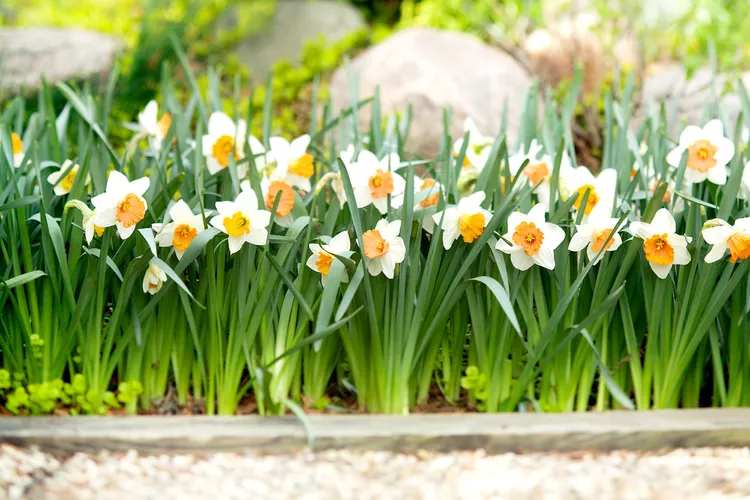
It's so simple to plant daffodil bulbs that, honestly, everyone should do it. Whether you're brand new to gardening or you've always had your hands in the soil, whether you live in Northern California or upstate New York, you can easily grow daffodils. Happiness, hope, and renewal are all associated with these beautiful flowers. Daffodils are sturdy plants that bounce back after snowfalls and some also thrive in the heat of the Deep South or West. And once you plant daffodils, they'll return year after year and even multiply.
Here's how and when to plant daffodil bulbs to enjoy their cheery colors for many springs to come.
Types of Daffodils
Daffodils (Narcissus spp.) are an antidote to the winter blues. There are many different types of daffodils to choose from. To keep the daffodil show running for months in your garden, plant daffodils from all three blooming times: early, mid-season, or late-blooming.
If you want the first possible flowers, try 'Rijnveld's Early Sensation', a classic yellow trumpet daffodil that blooms in January or February. The early, miniature, yellow 'Tete a Tete' deserves a starring location next to your front walk.
Daffodil expert Becky Heath of Brent & Becky's Bulbs points out that most of the popular daffodils bloom in mid-season, which for many climates is a 6- to 8-week period in March and April. She recommends the poet's daffodils like 'Actaea' as the last to bloom. Shop around to find windblown looks of the cyclamen-flowered daffodils, frothy double daffodils, and colors ranging from all shades of yellow to white, bi-color, orange, and even pink.
When to Plant Daffodil Bulbs
Once you've chosen which types to grow, you'll need to get your daffodil bulbs into the ground at the right time. The bulbs need to develop a root system before the ground freezes. The soil temperature should be 55 to 60 degrees, which will signal the bulbs to grow roots. Any warmer and the bulbs may begin to sprout leaves prematurely in the fall.
The planting time depends on your area and is typically anytime between September and November. Daffodils need moderately cold winters for their life cycle so if you garden in USDA Zones 5-7, you're in the sweet spot. Southern gardeners in USDA Zones 8-10 will have their best luck with jonquil daffodils.
Planting Daffodils in Warm or Hot Climates
Gardeners in warm areas in the West where the temperature drops significantly at night get repeat performances from 'Barret Browning' and 'Thalia'. For diehard daffodil lovers in hot climates like San Diego and Florida, daffodil sellers will come to the rescue, offering pre-cooled bulbs that are shipped to you for planting in December or January.
Where to Plant Daffodil Bulbs
Daffodils have two primary requirements: sunshine and drainage. To ensure your daffodils get full sun exposure in the spring, plant the bulbs in open spaces or under trees that lose their leaves each year.
For the best drainage, plant the bulbs on a slope and never in a spot where moisture accumulates. If there is no slope, create good drainage in a level area by digging a large hole about 8 inches deep and loosening the soil throughout.
How To Plant Daffodil Bulbs
Planting daffodils in groups of 5 to 10 creates the most eye-catching display of flowers. A hill on the edge of a woodland is an ideal spot for what is called "naturalizing." Select varieties that are known to be good naturalizers such as 'Ice Follies'. They will multiply and spread around an area on their own over time and you can always add new drifts each year.
Planting Depth
The American Daffodil Society recommends planting the bottom of the bulb at least 3 times as deep as the height of the bulb. For instance, you'd make a 6-inch deep hole for a 2-inch-tall bulb. Not all daffodil bulbs are the same size, so take a quick measure of your bulbs before you dig.
Place the bulb in the hole with the pointy side up. Use the original soil to fill in the hole and gently tamp it down. Water thoroughly.
If the soil is not naturally rich in organic matter, amend the soil with compost in the entire planting area before planting. Do not add any nutrients, whether they are organic or inorganic, to the planting hole, Although this used to be a common practice, it is detrimental to bulb growth and risks root burn.
Planting Patterns and Spacing
To plant many daffodil bulbs at once, dig trenches of any irregular shape, like a teardrop. If you want to tuck one bulb at a time in a garden that's already closely planted, use a slim spade or trowel, a bulb-planting tool, or even an auger that attaches to a power drill to create individual holes.
Plant daffodil bulbs about 6 inches apart to allow for spreading. If you are growing them in a container, pack them in about a finger-width apart for a dense flower display.
What to Plant with Daffodil Bulbs
Use daffodil bulbs to create a springtime floral rainbow by mixing other spring-blooming bulbs with them. Hyacinths and tulips go in at the same depth as daffodils, spaced the same way.
Even more fun is layering in miniature bulbs, which bloom in blue, white, yellow, or pink. For example, try crocuses that bloom before daffodils or grape hyacinths that usually bloom at the same time as mid-season daffodils. Smaller bulbs don't need to be planted as deeply, about 3 inches will do.
Another good planting strategy is to place your daffodil bulbs around perennials that will mask the dying bulb foliage in spring. Daffodils don't appreciate extra water in the summer, so choose their plant companions accordingly. If the daffodil location is under trees that leaf out in late spring, pop a collection of dry shade perennials in the ground at the same time you plant the daffodils. For a dry, sunny area, the classic follow-ups to daffodils are daylilies.
Pruning Daffodils After the Bloom
Snip off the flowers as soon as the blooms fade, otherwise the plant will waste energy producing a seed pod. The leaves will continue to feed the bulbs until the leaves turn yellow (after about 8 weeks). At that time, you cut off the stems and leaves and put them in your compost.
How to Transplant Daffodil Bulbs
After 3 to 5 years, your daffodils may produce fewer flowers as they get more crowded. Expand the space for your daffodils by dividing and replanting the bulbs after the leaves die back to the ground. Dig up the bulbs with a garden fork, spread them out, separate any smaller bulbs from the main bulbs, and replant following the directions above.
You can also store your newly divided bulbs until fall planting time. First, rinse off any dirt on the bulbs and set them out to dry for a week. Then place the dry bulbs in mesh onion bags or pantyhose and store them in a cool, dry space. Plant them back into your garden in the fall.