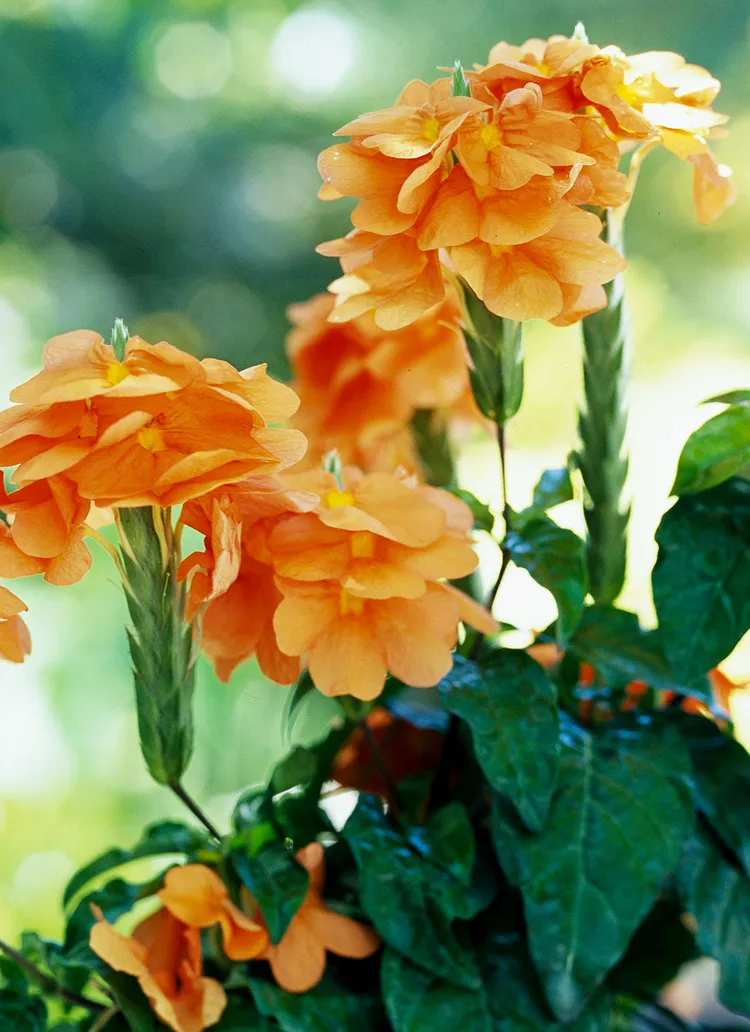
A long-lasting, colorful plant, crossandra (sometimes called the firecracker flower), can bloom almost nonstop all year long in the right conditions. With its bright orange, yellow, salmon, and pink flowers, it's grown as a perennial in warmer climates (Zones 10-11) or an annual in others. Crossandras also work as houseplants with their glossy, deep green foliage that looks good even if they aren't in bloom.
Unlike many common flowers, the blooms of crossandra are asymmetrical and relatively one-sided. Also, all of the reproductive parts are hidden in the tube of the bloom, so they require specific pollinators to create their seeds. The five-petaled flowers are borne on columnar square bloom stalks, which are unique.
Butterflies are very fond of crossandra and can be found visiting them for their delicious nectar.
Crossandra Overview
| Genus Name | Crossandra infundibuliformis |
| Common Name | Crossandra |
| Plant Type | Annual, Perennial |
| Light | Part Sun, Sun |
| Height | 1 to 3 feet |
| Width | 1 to 2 feet |
| Flower Color | Orange, Pink, Red, Yellow |
| Foliage Color | Blue/Green |
| Season Features | Fall Bloom, Spring Bloom, Summer Bloom |
| Special Features | Good for Containers, Low Maintenance |
| Zones | 10, 11 |
| Propagation | Seed, Stem Cuttings |
Where to Plant Crossandra
While crossandra is known as a florist plant in northern climates, it can make a great bedding plant in the South. The deep emerald green glossy foliage creates a foil for other plants to play against, and the brightly colored orange blooms add color all season long.
Crossandra can tolerate high heat and sun but does best with partial shade during the hottest time of the day or with dappled shade. Crossandra thrives in humidity; its leaves should be regularly misted if grown indoors.
How and When to Plant Crossandra
Plant crossandra in the spring in moist, well-draining soil. It will grow quickly in the right conditions. Before you plant, prepare the soil with any necessary amendments, breaking it up as you go so the soil is loose and well-draining. Dig a hole twice as wide and deep enough for the plant to sit at the same height as it did in its growing pot. Tease the roots apart gently and place the plant in the hole. Fill in the soil around the root ball and tamp it down.
Repeat with other crossandra plants, giving each plant approximately 12 to 15 inches of space to grow.
Crossandra Care Tips
Despite their delicate appearance, crossandras are pretty tough plants. With basic care and a little attention, they'll thrive and grow.
Light
Crossandra does best in indirect sunlight that's bright and warm. A shade garden is an ideal location for them when planted outdoors. Indoors, place them near a sunny window.
Soil and Water
Plant crossandras in well-drained, slightly acidic soil (pH 5.8 to 6.5), preferably with a decent amount of organic matter. If needed, you can amend your soil to make it more acidic by mixing peat moss into the top few inches of the soil. In drier soils, adding compost may help retain the moisture crossandras need to thrive.
Crossandras are heat tolerant but not drought tolerant. In dry weather—especially during the sweltering days of the summer—they may need supplemental watering. Keep soil moist (use mulch if necessary) and water your crossandra plants every other day during the growing season. Never water with cold water, as it could cause root shock, which may kill the plant.
Temperature and Humidity
Crossandras enjoy the heat and humidity of a tropical climate. In fact (outside of their long bloom time and glossy foliage), one of the most appealing things about crossandras is their impressive tolerance to heat. They have no problem making it through even the hottest summer heat in the south. They won't tolerate cold, though. Anything below 55ºF will cause leaf damage.
Whether you grow it indoors or out, keep your crossandra plant comfortable with plenty of humidity. Outdoor plants could benefit from a layer of mulch to retain soil moisture. For indoor plants, mist the leaves occasionally and place your pot on a tray of pebbles and water so the plant can draw moisture without getting soggy roots.
Fertilizer
Outdoors, crossandra should be fertilized monthly in summer and every two months or so during the winter months using a granular nutrient. Err on the side of caution when fertilizing since over-fertilization can be damaging. Indoors, use a liquid fertilizer at half-strength every two weeks during the summer and every month during winter.
Pruning
Crossandra can have a loose plant habit and may need some pruning and pinching to encourage good branching and an overall bushier plant. Planting in more sun will also achieve this, as shadier-grown plants will be sparser and loosely branched. It's best to start with good branching at the base, so pinch plants early to encourage branching.
Potting and Repotting Crossandra
If you are planting a seedling into a pot for long-term indoor growth, choose one with excellent drainage and fill it with potting soil. Make a hole just slightly larger than the root ball and place the plant in the divot, pressing the soil firmly around the roots. Water the plant thoroughly and put it on a wet pebble tray to provide ample humidity. Keep it in a sunny location with bright, indirect light.
Avoid repotting crossandras if you can since they don't react well to being transplanted. It's unnecessary to repot crossandra more than every few years, even if they're root bound. When you need to repot, use a terra-cotta planter with plenty of drainage. Add pebbles to the bottom of the pot, which should be 2 inches larger than the existing pot. Make sure the plant is moist before moving, and water it well after repotting and filling with soil.
Pests and Problems
Treat infestations of common pests like aphids and mites as soon as you see evidence of them, including white powder or small webs. Try using a blast of water to start, and if that doesn't work, use a spray with 70% isopropyl alcohol. Avoid chemical treatments if possible.
How to Propagate Crossandra
To grow crossandra from seed, start them indoors in late winter or early spring. Spread your seeds across a tray filled with seed-starting mix and lightly sprinkle more mix on top of the seeds. As the seeds germinate, you can simulate the tropical environment they prefer by placing the tray on a warming mat and misting the soil regularly with a spray bottle. When the seeds sprout, divide the plants into individual growing pots and place them in a window with bright, indirect light until the seedlings can be transplanted outside or into their intended indoor pots.
Crossandra can also be propagated from stem cuttings. To do so, cut stems (a touch below the node) from existing plants in the early spring when the growing season begins. Dip the cut stems in a rooting hormone and stick the stems in growing pots with a seed-starter mix. Water thoroughly and keep the pots on a warming mat, misting the soil regularly until you see new growth. Once new growth emerges, you can move the seedlings to your desired location if the temperature is warm enough. Otherwise, keep it indoors until temperatures are well above 55 degrees Fahrenheit.
If you're growing your propagated stems indoors, you'll need to repot after a month or so to allow for rapid growth.
Types of Crossandra
Crossandra can be found in quite a few warm colors, but orange is the most prevalent.
Orange Marmalade Crossandra
Crossandra infundibuliformis 'Orange Marmalade' is a beautiful orange variety with great garden performance. Zones 10-11
Crossandra 'Florida Sunset'
The ‘Florida sunset’ crossandra cultivar has an average growth height of 16 to 20 inches with a 10 to 12-inch spreading habit. It features glossy, green foliage and fragrant, golden-orange blooms.
Crossandra 'Mona Wallhead'
The ‘Mona Wallhead’ cultivar features salmon-pink moth-shaped flowers and grows to approximately 12 to 18 inches tall and about 8 to 12 inches wide. It is slightly more cold-hardy than other cultivars and can occasionally tolerate temperatures as low as 32 degrees.
Crossandra 'Lutea'
The ‘lutea’ cultivar (often called yellow crossandra or yellow firecracker flower) produces golden yellow blooms that continue from spring until the first frost. It typically grows to approximately 12 to 36 inches in height.
Crossandra Companion Plants
French Marigold
French marigolds tend to be frilly, and some boast a distinctive "crested eye." They grow roughly 8-12 inches high with a neat growth habit and elegant dark green foliage. They do best in full sun with moist, well-drained soil, will flower all summer long, and may reseed. Zones 2-11
Pentas
Pentas is one of the best butterfly and hummingbird-attracting plants around. It blooms all summer long, even during the hottest weather. The plant grows well in containers and the ground—and makes a good houseplant if you have enough light. It does best in full sun and moist, well-drained soil. Pentas is grown as an annual in most parts of the country, but it's hardy in Zones 10-11. Plant it outdoors after all danger of frost has passed.
Zinnia
A packet of zinnia seeds will fill an area with gorgeous flowers in a few weeks in a fantastic array of shapes and colors. Zinnias are so highly attractive to butterflies that you can count on having them in your garden every afternoon. Zinnias grow quickly from seed sown right in the ground and do best in full sun with dry to well-drained soil. Zones 2-11