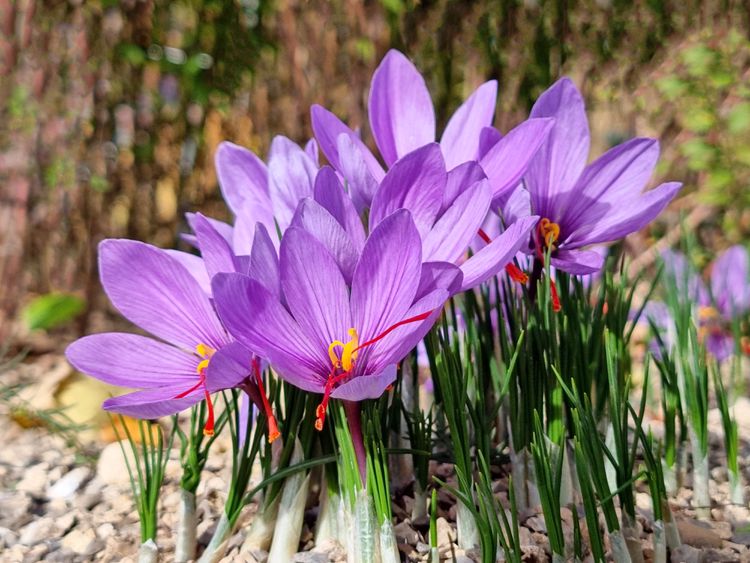
Saffron is the most expensive spice in the world, so you may cringe when you see the price tag on a tiny jar in the grocery store. However, saffron comes from the saffron crocus (Crocus sativus), a snap to grow and harvest in your home garden—with bonus points for the short, purple flowers in the fall. The prettiest way to save money on your food budget is to learn how to grow saffron crocus corms in the late summer or early fall, enjoy the lovely fall blooms, and gather saffron in October.
You may think of crocus as spring-blooming bulbs, but the saffron crocus is also called fall crocus or autumn crocus. A mature 3-inch crocus corm—a corm is similar to a small bulb—produces two to four purple flowers in October; then it multiplies and rewards you with more blooms each year.
Saffron Overview
| Genus Name | Crocus sativus |
| Common Name | Saffron |
| Plant Type | Bulb, Herb |
| Light | Part Sun, Sun |
| Height | 4 to 6 inches |
| Width | 2 to 4 inches |
| Flower Color | Blue, Purple |
| Season Features | Fall Bloom |
| Special Features | Cut Flowers |
| Zones | 5, 6, 7, 8 |
| Propagation | Division, Seed |
| Problem Solvers | Drought Tolerant |
Most crocus have some toxic characteristics. Crocus sativus is safe in normal usage, although consuming 5 grams of saffron daily may have toxic consequences.
A similar-looking plant, colchicum (Colchicum autumnale), is also called autumn crocus, and all parts of that plant are highly toxic to humans and pets. With cup-shaped lavender or orchid flowers, the colchicum can easily be mistaken for the saffron crocus.
Where to Plant Saffron Crocus
Saffron crocus is hardy in USDA Hardiness Zones 5-9. Plant it in full sun and well-drained or sandy soil. If those conditions are not easy to come by in your garden, fill a container with potting soil, add the crocus corms, and put it in your sunniest spot. The crocus flowers are only 3 to 5 inches tall, so place them where you can see the purple blooms. You can also tuck the corms one by one into low groundcover (which conceals them from squirrels and chipmunks) or give them their own garden bed.
How to Grow Saffron Crocus
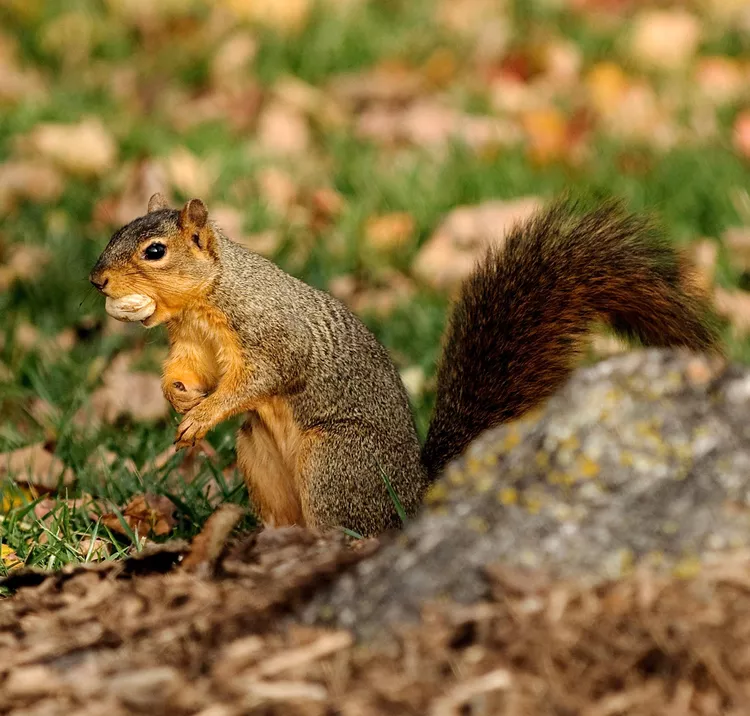
Early fall is the planting time for saffron crocus. It’s also foraging time for chipmunks and squirrels, who keep their sharp eyes out for new plantings to eat. Disguise your gardening work by planting amid ground cover or spreading a thin layer of mulch on top of the newly planted crocuses. If you want to be super secure, tack down a layer of chicken wire on a freshly planted crocus bed.
Dig 3 inches down in well-drained soil, and plant the saffron corms with the pointed end down. The pointed end usually has some dried roots, which helps show you the way. You can decide whether to dig one 3-inch trench or use a narrow trowel to open one 3-inch hole at a time.
Nestle the corm in the hole or trench and cover it with enough soil to make it level with the surrounding area. Press down on the soil firmly, and then water the planting area with a watering can or a gentle spray from your garden hose. If the newly planted area dips down and forms a basin, add more soil to match the soil level nearby; otherwise, water pools and rots the corms—space the corms 3 to 4 inches apart.
Saffron crocus has a satisfyingly short turnaround time; plant it in August or early September and harvest it in October. To produce one tablespoon of saffron, you need to plant about 50 crocus corms.
Saffron Crocus Care Tips
Light
Saffron crocus thrives in full sun. However, these plants bloom in fall when many trees have dropped their leaves, so crocuses can grow in areas that receive partial shade from trees during the summer.
Soil and Water
Plant the corms in well-draining garden soil or sandy soil. Water them immediately after planting them, and then they need only a half-inch of water per week for the rest of the growing season. During their summer dormant period, stop watering them.
Temperature and Humidity
Saffron crocus thrives at 70°F but grows in a wide range of temperatures from 50°F to 90°F. They tolerate lower temperatures for short periods. They are not cold hardy in USDA Zones 3-4, so dig the corms or move plants in a container to a warmer sheltered area after they bloom in fall in those zones.
This plant doesn't do well in high humidity; the saffron product quality is affected. The best humidity range for saffron crocus corms is 40–50 percent.
Fertilizer
The corms hold sufficient nutrients to produce crocus blooms when planted, but the plants may benefit from being fertilized once a year if the soil wasn't amended with an organic fertilizer, such as bone meal, at planting time. In early spring, sprinkle a granular fertilizer with a 5-10-5 NPK ratio on the ground around the plants. Make sure no fertilizer touches the corm. Follow the product directions for quantity.
Potting and Repotting Saffron Crocus
You can plant saffron crocus in containers, but you'll need a huge container to produce a small amount of saffron. Bury the crocus corms 2-3 inches deep in well-draining potting mix and space them 3 inches apart. Water them and place the container in full sun.
If you only want a few plants to enjoy their blooms indoors, plant them in the fall and keep the container at about 70°F. The flowers will bloom six to eight weeks later. After the foliage dies back, remove the corms and plant them in the garden. The following year, start fresh with new corms rather than attempt to winter over the ones that have already bloomed indoors.
Pests and Problems
Growing saffron crocus is not without its challenges. Chipmunks and squirrels pose a problem in the fall, while mice, moles, voles, and rabbits feed on the foliage and corms during winter. During the growing season, the saffron mite is known for attacking damaged corms, although planting the corms more than 5 inches deep prevents this. At the end of the saffron season, thrips lay their eggs in the leaves, causing unattractive spots on the leaves, but otherwise, it doesn't affect the harvest.
Corm rot and root rot can usually be prevented by watering sparingly and planting in well-drained soil.
How to Propagate Saffron Crocus
After five years, dig up and divide the corms while they are dormant in July and August. Dry and store the corms in a cool, dry place, or plant them immediately in a new location.
Types of Saffron Crocus
The saffron crocus corms sold in the United States are not differentiated by cultivar. Pennsylvania has produced saffron crocus for over a hundred years, but most Crocus sativus corms are grown in Iran, Spain, India, and Greece. When shopping for corms, you may—or may not—see a country designation.
Harvesting Saffron
The lavender flowers of the saffron crocus bloom for two weeks. As the petals grow longer, so do the slender stigmas at the center of the flowers. Keep an eye on the flowers and pounce when the petals have stabilized in size. The traditional rules for harvesting sound like something out of a fairytale—pick the flowers in midmorning on a sunny day—but there are good reasons for those rules. You want the flowers to be partly open and the petals dry.
The best way to harvest saffron is to take a basket into the garden, pick all the flowers, and sit indoors at a table to tweeze the three red stigmas from each bloom. If you have the patience (and a garden kneeler), you can keep the flowers on show in your garden a bit longer by taking the tweezers outdoors and removing the stigmas on the spot as you pass each flower. If you’re plucking only the stigmas, gather them in a deep bowl to keep them from blowing away.
Storing Saffron
Back in the house, spread the stigmas out to dry in a single layer on a paper towel, screen, or dehydrator. After a day or two, put them in a jar or other airtight container and store them in a dark, cool place.