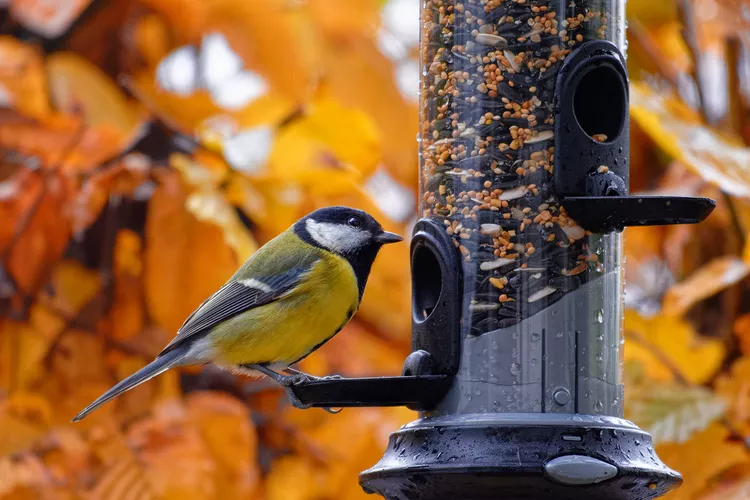
Wild birds, such as finches, robins, and cardinals, are a fascinating part of many gardens and landscapes. They're so much fun to watch, especially when you draw them to your yard with feeders so you can get a closer look. The cast of birds you'll see gathering at feeders changes with the seasons, but their lively antics will be a constant delight. Attracting wild birds is usually quite easy. There are, however, a few common mistakes that can repel, injure, or even kill birds, spoiling your well-intended efforts. Make sure to avoid the following bird-feeding pitfall so you can keep your winged visitors healthy and happy year-round.
1. Not Enough Variety
To encourage the greatest diversity of birds in your yard, use a variety of bird feeders. Tube feeders, platform feeders, suet feeders, fruit feeders, and nectar feeders are some of the most-common types and will satisfy a wide variety of avian visitors. A feeder attached to the outside of a window for small songbirds is particularly fun; you can watch visitors up close without disturbing them.
Make sure the feeders have no nooks or crannies that birds can get stuck in. "It may seem unlikely, but birds can sometimes trap themselves in the strangest places," says Emma Greig, manager of Project FeederWatch at the Cornell Lab of Ornithology. "Having feeders that don't have any strange spots where birds could get their head stuck or their whole body stuck is important."
2. Infrequent Cleaning Routine
Feeders should be cleaned thoroughly at least every two weeks, and more often in wet weather. "Fungus and bacteria thrive on damp seed. This is especially true for open platform feeders. These need to be cleaned weekly in any season," says Katie Sieving, professor of wildlife ecology and conservation at the University of Florida. "Having feeders that are easy to take apart and wash thoroughly with soap and hot water, or a diluted bleach solution, is very useful. Make sure to rinse well after cleaning," says Greig.
For hummingbird feeders, mold and bacteria can grow quickly in the sugar-water solution used in them, which can make the birds sick. Clean these feeders at least once a week, or more frequently if the nectar looks cloudy. Scrub all parts with a bottle brush in hot, soapy water, followed by a mild bleach or vinegar solution, then rinse and dry them thoroughly. And when you're refilling your cleaned hummer feeder, "Please don't use sugar mixes with red dye," Sieving adds. "Very bad for these tiny birds! The red plastic bits on the feeders are all the red you need to attract them. The sugar water can be clear."
3. Using Low-Quality Seed
Buying cheap seed, or not keeping it properly stored can lead to some serious problems. "Most of the time, cheap bird food has a lot of filler in it that ends up on the ground...not only wasting your money, but also becoming an attractant for rodents," explains Alison Holloran, executive director of Audubon Rockies, and vice president of the National Audubon Society.
According to a study conducted by the U.S. Fish and Wildlife Service, the two types of seed most preferred by wild birds are black-oil or striped sunflower, and white proso millet. Use the freshest seed possible (not leftover from last year), and always keep stored seed dry. "Oily seeds like black-oil sunflower seed and thistle can go rancid over time, and birds won't eat it. You'll have a full feeder, but no visitors," says Greig.
4. Feeders Left Empty
Birds seem to learn quickly where their next meal is coming from, and will return again and again to well-stocked feeders. But if feeders are left empty for long periods, birds will look elsewhere.
5. Forgetting Water
Birds seek water to drink and bathe, so birdbaths placed near feeders will attract more birds to the area. According to Project FeederWatch, birds prefer birdbaths that are at ground level, but will visit raised baths as well. It's important to change the water regularly to keep it fresh and clean. In winter, you can use a birdbath heater to prevent ice from forming. Never use anti-freeze, which can be lethal to birds.
6. Poor Feeder Placement
Birds like a sheltered spot where they can perch, such as the branches of trees or shrubs, until they're ready to take a turn at the feeder. But don't place the feeder under strong branches that can be used by cats who may lie in wait for unsuspecting birds. "Feeders should be close to cover, but not totally surrounded by cover. A feeder hanging from a tree branch, far enough off the ground, but pretty open underneath is great," says Holloran.
7. Using Harmful Pesticides
Even sub-lethal pesticide exposure can harm birds by disorienting them during migration, reducing their ability to maintain weight, and decreasing their ability to avoid predators. "Insects are good for birds, so don't use pesticides. By avoiding pesticide use as much as possible, you might be doing birds even more good than by putting out bird seed," says Greig.
8. Allowing Outdoor Cats
The American Bird Conservancy says that outdoor cats are the single greatest source of anthropogenic (human-caused) mortality in birds. "If you are going to feed birds, keep your cats inside, and talk to your neighbors about why they should as well," says Holloran, "Otherwise you may just be providing a lunch buffet for your feline friends!"
So keep those feeders clean, filled with good seed, and in a protected spot. Then, sit back and enjoy the show!