Gardening by the moon has been practiced since ancient times. Numerous cultures across the globe, from the Babylonians to Indigenous American peoples, have aligned their gardening tasks with the cycles of the moon. And the pull of lunar gardening remains strong with today’s gardeners; you can find moon gardening calendars, and even apps, to help coordinate your planting and harvesting with the waxing and waning of the moon. Both biodynamic farming and permaculture gardening communities have embraced moon gardening practices in various forms as well.
But is gardening by the moon actually effective? Ahead we’ll look at the basic principles and find out what experts say, based on research and their personal experience.
- Katie Dubow is president of Garden Media Group, which tracks garden industry trends.
- Toby Wolf is co-owner of the Gardening by the Moon calendar.
- Linda Chalker-Scott is a horticulturist, author, and associate professor at Washington State University who co-hosts a garden myth-busting website, The Garden Professors.
- Brooke Edmunds is an Extension horticulturist at Oregon State University.
What is gardening by the moon?
Katie Dubow, president of Garden Media Group, says that based on surging Google searches, "Lunar gardening is emerging as one of this year's standout outdoor living trends. She says this trend “underscores a broader, contemporary interest in horticultural practices deeply entrenched in ancient wisdom and the natural world's rhythms.”
Lunar gardeners, observing the ebb and flow of the tides, believe the moon’s influence on Earth correlates to a fluctuating availability of water for plants and the soil, with the highest levels in the days approaching the full moon.
“Plants and animals like us are mostly water, so the moon has influence on that,” says Toby Wolf, co-owner of the Gardening By the Moon calendar.
Wolf first heard about the concept of gardening by the moon from a farmer in North Carolina. He became so interested, he started following and eventually took over the Gardening by the Moon calendar in 2021 when owner Caren Caterall retired.
Wolf dove into books and research on gardening by the moon and consulted with Indigenous people near his home garden in Syracuse, New York, mainly “seedkeepers” of the Haudenosaunee (the Six Nations Confederacy). He was impressed, he says, by the commonalties he saw among diverse traditions using the moon phases.
How to Garden by the Moon
The most well-known method in the U.S. allocates growing tasks to the period of the waxing (increasing) moon and harvesting, maintenance, and pruning jobs to the waning (decreasing) moon. The moon’s four phases – the new moon, first quarter, full moon, and last quarter – each last about a week. Plants that flower and fruit above ground are planted from the new moon until a few days before the full moon. In contrast, root crops, tubers, and bulbs are planted between the full moon and the new moon.
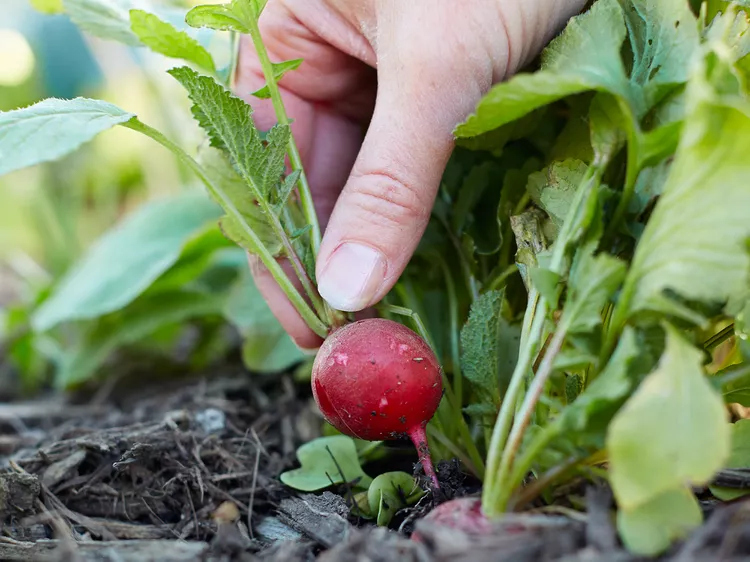
“On the waxing moon, seeds absorb more water and germinate more quickly as water is being brought up in the water table,” Wolf explains. “In the waning moon, water seeps down. It’s a good time to plant root crops like radishes, beets, also anything that is going to overwinter.”
Other systems, including biodynamic farming practices, further divide cycles along astrological lines. Based on different calculations, Wolf says their recommendations can contradict each other by up to four days, so it’s helpful to stick with one system.
When adding in the lunar zodiac, or “moon sign”, whose phases shift every 2.5 days, there are two different zodiac systems used to determine the moon sign. The most common is the tropical (astrological) system organized by seasons. The second is the sidereal/astronomical, used by author Maria Thun and biodynamic growers, including specific leaf, fruit, flower, and root days. Wolf’s calendar incorporates both moon phases and moon signs, using the tropical system.
Does gardening by the moon really work?
In 2023, Wolf experimented with sowing scabiosa flower seeds indoors, sowing half his seeds in Leo, said to be the most barren phase for planting, and half in Virgo, a beneficial sign for flower-sowing two days later in the same conditions. He planted them outside on the same day in the third quarter.
“The first planting, initially planted under Leo, never bloomed,” Wolf says. “The second Virgo planting did bloom and remained healthy and green until mid-February,” despite a cold winter with several days of temperatures in the single digits.
So, what does more formal research say about the benefits of gardening by the moon? “Moon phases have no direct effect on plants,” says Linda Chalker-Scott, a horticulturist, author, and associate professor at Washington State University, who also hosts a garden myth-busting website. “They do affect marine life and can affect insect cycles. But not plants. There are no “pros” to gardening by the moon,” she adds.
Chalker-Scott points to a 2020 study which reviewed previous research and textbooks, disclaiming causal relationships between the moon’s gravitational pull or its illumination and plant growth.
Other Factors That May Be Influencing Plants
If lunar phases don’t directly influence plants, what else might be encouraging people to follow these practices for so long? Industries from timber to fruit farming have anecdotally noted changes in plants during the month, suggesting times to harvest for better storage or a better price by weight.
For example, in Puerto Rico, palm leaves cut near the full moon are said to last longer than others. A 2002 study explored if the mechanism may be different than water or light levels. Examining the leaves, researchers found higher levels of carbon and hemicellulose, and lower levels of calcium during that time, a combination which might discourage insect foraging, enabling stronger leaves.
Lunar influence may also be implicated in circadian rhythms. Today the science around biological clocks is expanding, but the concept was first proposed by Frank Brown, whose studies on lunar effects were initially ridiculed.
Brown studied organisms including beans, potatoes, and snails in rooms shielded from light, and they all calibrated their systems along with local sun, moon, and weather patterns. Even when imported from other parts of the world, the subjects “knew” what time of day and season it was, perhaps suggesting a link we are still understanding.
Should you garden by the moon?
“I don’t think lunar gardening is harmful, but it may not have the benefits that gardeners think it does,” says Brooke Edmunds, an Extension horticulturist at Oregon State University. She’s for it if it gets people out into the garden, as long as they put the plants’ needs first.
“Beyond lunar cycles, gardeners need to also be thinking like a plant,” she says. “Is it the right soil temperature to put plants or seeds in the ground? Is a big rainstorm predicted that will wash out your newly planted seeds? Or is it too early and there might be a frost?”
Most gardeners would find it prohibitive to follow all the specific moon gardening practices to the letter. In the hubbub of spring, when so many plants need planting and attention, finding the ideal moment for each plant’s zodiac sign would be a tall order. Not to mention limiting harvesting to only one week a month when peas or tomatoes are coming in.
“I think of gardening by the moon as one of the tools I can use in my garden to make sure it’s healthy, but I don’t ignore the other aspects of good gardening,” agrees Wolf. Before planting, he checks his soil temperature and frost dates, and picks his peas as they ripen.
Whether you like the idea of organizing your tasks, following Nature’s cycles, or just experimenting, it seems that when it comes to gardening by the moon, as Shakespeare said, there may be more things in Heaven and Earth than are dreamt of in our philosophy–or yet discovered by our research.
New