Don't panic if you see spots on your tree's leaves or something strange on the bark. Get to work diagnosing the problem with this basic guide and pictures of tree diseases and pests that are common and plague a wide range of species. You'll find comprehensive details about visible damage and control measures to help you understand what is troubling your tree.
Leaf Rust
You're dealing with leaf rust when you see orange, gold, or reddish spots rupturing on leaf surfaces. While it rarely kills plants, rust fungus makes leaves unsightly and weakens the plant by interfering with photosynthesis, the process a plant uses to make food. Each plant species susceptible to rust hosts a particular rust species that may vary from other rust species in appearance.
Damage: Signs of leaf rust tree disease include leaves that are discolored or mottled yellow to brown and powdery fungal clusters on the leaves. The powdery material can be scraped off. Also, the leaves may become twisted and distorted and may dry and drop off, and twigs may also be infected.
Control: Usually, rust fungi are harmless to the plant and rarely require control measures. Where practical, remove and destroy leaves in fall. Several fungicides are available that can control rust fungi. Check with your local tree service for current recommendations.
Fire Blight
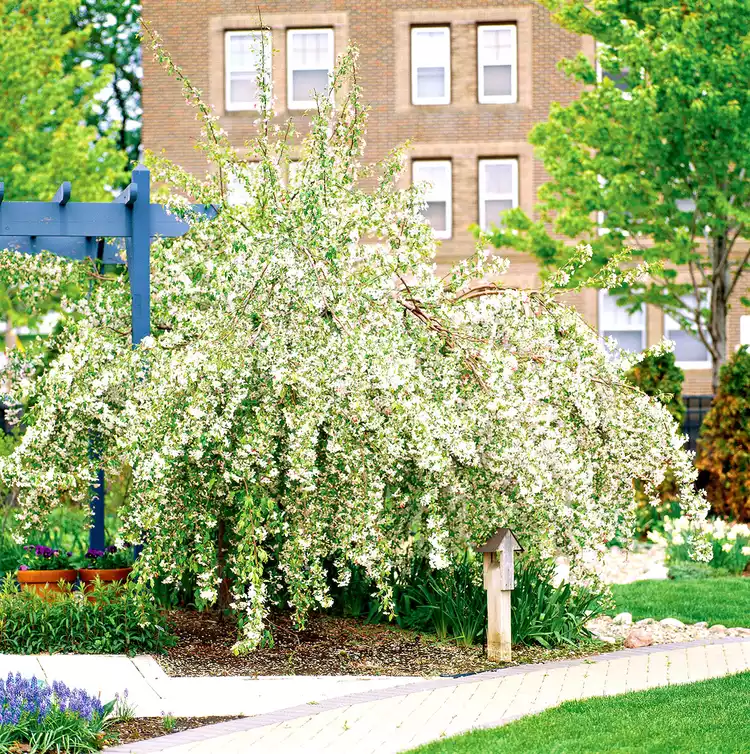
Aptly named, fire blight gives trees and shrubs the appearance that portions of their branches have been scorched by fire. Blossoms and leaves of some twigs suddenly wilt and turn brown or black. Fire blight is a tree disease caused by bacteria that are particularly active in warm, moist weather. Bees, rain, and infected pruning tools spread the disease.
Damage: Tips of infected branches may hang down. The bark at the base of the blighted twig takes on a water-soaked appearance, then looks dark, sunken, and dry. Fire blight attacks a few twigs at a time to create a flaglike effect of dead foliage on different areas of the plant.
Control: Prune off 12 inches beyond discoloration and destroy the pruned branches. Disinfect pruning tools after each cut by dipping in one part chlorine bleach and nine parts water. Avoid excess nitrogen fertilizer in spring and early summer. It encourages succulent growth, which is more susceptible to fire blight infection.
Powdery Mildew
Powdery mildew forms a whitish coating on leaf surfaces during dry, cloudy weather with high humidity. Several fungi varieties cause this tree disease, affecting plants that grow in the shade the most.
Damage: When this common plant disease hits, leaves are covered with a thin layer or irregular patches of powdery, grayish-white material. The leaves may become distorted. Infected leaves may turn yellow or red and drop. In late fall, tiny black dots are scattered over the white patches like pepper grains.
Control: When planting new trees and shrubs, choose resistant varieties. Some highly susceptible plants, such as crape myrtles, crabapples, and lilacs, have cultivars selected for resistance to powdery mildew. Several fungicides are available that will control this mildew.
Gall
A symptom of a fungal or bacterial condition or infection by several insects, gall is an odd and sometimes unsightly tree disease with growth that can be found on a tree. It can vary from 1/8-inch growth on leaves to massive swells on a tree's trunk.
Damage: Swollen growth on leaves, shoots, or the trunks of trees.
Control: It can be hard to determine the cause of these symptoms, and treatment would be different depending on the cause. Because of these factors, it's best to consult a tree care professional if you observe an outbreak of gall.
Witches' Broom
Characterized by odd-looking clusters of intense growth, shoots infected with witches' broom grow out of lateral buds on branches in a pattern that can resemble a broom.
Damage: A prolific broom infection has the potential to pop up all over the tree, destroying it in some cases. Trees are susceptible to infection of witches' broom at vulnerable points, such as where there's been pruning or injury.
Control: Prune and destroy brooms and injured branches. Then, spray the affected tree with locally recommended fungicides in fall or early spring.
Canker
Canker is a tree disease characterized by a localized dead area on a trunk or branch. Cankers are caused by everything from mechanical damage inflicted by a lawn mower to environmental stress, such as frost cracks and sunscald, to types of fungi and bacteria.
Damage: On young or smooth-barked trees, the surface of the canker is often discolored, and tissue around the canker is enlarged. The size of a canker can range from a small lesion on a branch to a massive dead area on the plant's trunk. Cankers on young trees can kill them. They rarely kill established trees, but they may cause severe growth deformities.
Control: Most canker-causing fungi infect stressed or injured trees. The best defense against canker is prevention. Keep trees healthy and prevent infection. Wrap young, thin-barked trees, such as maples and apples, in winter to prevent sunscald and frost cracks. In periods of drought, water trees thoroughly.
In the case of infectious cankers, remove branches six to 12 inches below the canker. Dead or dying branches should also be removed. Prune during dry weather or winter to minimize the spread of the disease. If the tree can't be saved, contact a tree care service to remove it before it becomes unstable and falls.
Leaf Spot
Leaf spot is fungi that cause reddish brown spots that rot holes in foliage. It spreads rapidly during cool, wet spring weather when new foliage develops. Ornamental cherry trees are especially vulnerable to leaf spot tree disease.
Damage: Infected leaves develop spots, turn yellow or brown and drop off the tree.
Control: Shake infected leaves from the tree onto a disposable sheet or tarp and destroy them to prevent further infection. Prune the tree to encourage better air circulation and mulch well to prevent the fungi from splashing up from the ground.
Japanese Beetle
Adult Japanese beetles feed on flowers and leaves of various trees, such as linden, crabapple, and birch. When the beetles find a food source, they release a scent that attracts more beetles. Females lay eggs in the soil, which hatch into grubs, a major lawn pest.
Damage: Japanese beetles eat leaf tissue between the veins, creating a skeletonized effect. They may also eat large holes in flower petals.
Control: Treat for grubs in your lawn, and you'll reduce the number of Japanese beetles (unless your neighbor doesn't control grubs, in which case beetles will invade your garden). A fungus called milky spore controls grubs but may take a few years to build up an effective concentration. Adult beetle traps may lure more beetles than you already have in your garden. Plant trees and shrubs that beetles don't prefer to feed on. Arborvitae, lilac, hemlock, holly, juniper, pine, and yew are a few plants that Japanese beetles rarely attack.
Emerald Ash Borer
A destructive metallic green beetle, emerald ash borers (EAB) invade and kill all types of ash trees (Fraxinus species). EAB kills trees in 2 to 4 years after initial infection.
Damage: An EAB-infected tree has a thin or dying crown and erratic growth along the tree's trunk. The tree's dead growth is often a popular site for woodpecker feeding, as the bird hunts the beetles in the bark. Finally, upon close inspection of the trunk, you might see small but distinctive "D" shaped holes. This is where the beetle exited the tree.
Control: Many preventive treatments are available for trees within 15 to 20 miles of other infected trees. Treatment outside this risk zone is not prudent. Remember that treatments must be done yearly for the tree's life and won't be effective against other diseases that may compromise the tree's health.
Bagworm
Bagworms eat the leaves of many trees and shrubs. Larvae hatch in May or June and immediately begin feeding. Each larva constructs a "bag" that covers its entire body. Larvae pupate in the bags. When adult males emerge from pupal cases, they fly to find females and mate. After mating, the female lays eggs in the bag and overwinters on a tree or shrub. Larvae emerge in spring to continue the cycle.
Damage: Leaves are chewed, and branches or entire plants may be defoliated. Brown, 1- to 3-inch-long "bags" hang from the branches.
Control: Spray with Bacillus thuringiensis (Bt) between late May and mid-June to kill young worms. Handpick and destroy bags in winter to reduce the number of eggs and young the following year.
The Next Step
When you spot signs of pests on your trees, follow these four tips for safely gaining the upper hand in the battle.
1. Think before you treat. Pest damage is often cosmetic. A pest creates tattered foliage or spotted leaves for a short time, but environmental conditions may change, and then the pest is no longer present. The plant will cast off the damaged leaves and continue to thrive. A healthy ecosystem makes this possible.
2. Plant diverse species. Pests tend to prey on particular plant groups. Plant a mix of species, and if pest damage or tree diseases occur, it will be confined to a few plants instead of spreading through the entire landscape.
3. Choose plants that are well-suited to your site. Healthy, thriving plants will naturally overcome many pest attacks.
4. More is not always better in gardening. More water, fertilizer, and mulch can all lead to disease and pest problems.