Gardening where deer are plentiful can be challenging, especially in shady conditions. If you're looking for deer-resistant shade plants, focus on plants with substantially textured leaves that may lack appeal to hungry critters or tastes they'll find bitter and unappetizing. Deer are also turned off by heavily scented herbs, so intermingling those with your flowering plants or choosing plants with pungent aromas will help to keep them away. Here are a few these creatures tend to shy away from—although no plant can be considered completely deer-resistant.
Lily-of-the-Valley Bush
Sometimes, it seems that deer will eat about anything, but lily-of-the-valley bush (Pieris spp.) is an exception. This shade-loving broadleaf evergreen has thick green foliage and drooping clusters of spring-blooming pink, white, or rose flowers that deer don't even nibble on. Occasionally called andromeda, lily-of-the-valley bush does best in part shade. Use it in a foundation planting or shrub border.
The flowers, leaves, and sap of the lily-of-the-valley shrub are considered highly toxic to humans and pets. So, use caution when planting this pretty shrub where children and pets pplay.
Growing Conditions: Slightly moist, acidic soil
Size: To 12 feet tall and 8 feet wide
Zones: 5-8
Lungwort
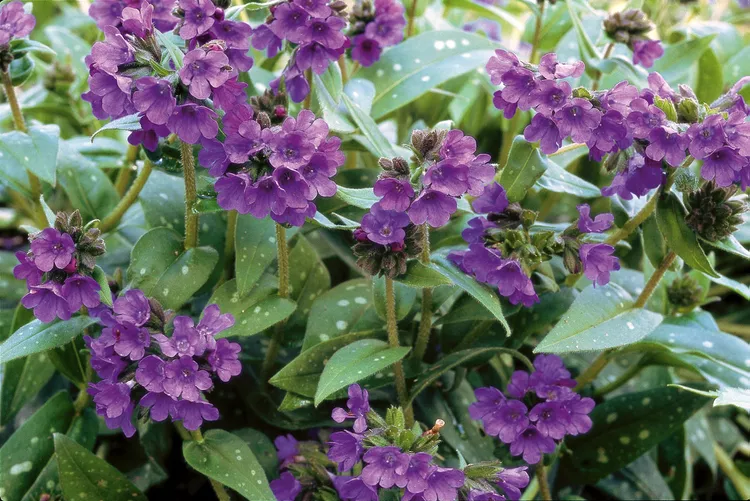
Lungwort (Pulmonaria) is an attractive deer-resistant shade plant. This reliable perennial comes in several varieties, all with pretty spotted or variegated foliage with sprays of pink or blue flowers in the spring. This easy-care plant makes a great companion for spring-flowering bulbs such as narcissus and scilla.
Growing Conditions: Slightly moist, well-drained soil
Size: To 1 foot tall and 2 feet wide
Zones: 2-8
Astilbe
Brighten the dark corners of your landscape with the feathery finery of astilbe. This tough perennial bears blooms in red, coral, white, lavender, and cream and has fern-like leaves that provide color and interest even when the plants are not in bloom.
Growing Conditions: Rich, moist, well-drained soil
Size: To 3 feet tall and 30 inches wide
Zones: 4-8
Jack-in-the-Pulpit
Bursting into bloom in the early spring, Jack-in-the-pulpit (Arisaema triphyllum) is a reliable native wildflower that is easy to grow in gardens. This perennial produces an unmistakable hooded green or purple flower, often followed by red berries later in the season, and usually goes dormant in midsummer. Deer avoid Jack-in-the-pulpit because the plants contain a toxic substance, calcium oxalate.
Warning
Jack-in-the-pulpits are toxic, especially the corms (bulblike roots), so exercise caution when planting these if you have pets or small children around.
Growing Conditions: Rich, damp, acidic soil
Size: To 2 feet tall and 18 inches wide
Zones: 4-9
Columbine
The pretty, starlike flowers of columbine (Aquilegia spp.), a deer-resistant shade plant, are held aloft on wiry stems that dance gracefully every time the wind blows. An easy-care native wildflower, columbine comes in various colors, shapes, and sizes that thrive in part shade. Individual columbine plants can be short-lived, but they self-sow freely and eventually form large drifts of color.
Growing Conditions: Moist, well-drained soil
Size: To 3 feet tall and 2 feet wide
Zones: 3-9
Bergenia
Trusses of pink flowers held above shiny, heart-shaped leaves make bergenia a top pick for your shade garden. Commonly called pigsqueak because the leaves make a squealing sound when rubbed between your thumb and finger, bergenia will remain evergreen in the southern part of their range.
Growing Conditions: Rich, moist, well-drained soil
Size: To 18 inches tall and wide
Zones: 3-8
Japanese Painted Fern
Try deer-resistant shade plant Japanese painted fern (Athyrium niponicum pictum) if deer are a problem in your neighborhood. It grows 12 to 18 inches tall with grayish-green fronds overlaid with silver and maroon highlights. Over time, Japanese painted fern will naturalize an area, forming dense clumps. Japanese painted fern grows best in rich, slightly moist, well-drained soil.
Growing Conditions: Rich, slightly moist, well-drained soil
Size: To 18 inches tall and 2 feet wide
Zones: 4-9
Ligularia
Grown as much for its huge dark green leaves as it is for its spikes of bright yellow flowers, deer-resistant shade plant ligularia will suffer when rainfall is scarce. Be sure to mulch the plants to maintain soil moisture. Use ligularia along a shady stream bank, in a rain garden, or at the edge of a pond.
Growing Conditions: Grow in moisture-retentive soil and water deeply once a week
Size: To 4 feet tall and wide
Zones: 4-9
Brunnera
Also called Siberian bugloss, brunnera (Brunnera macrophylla) is prized for its colorful, heart-shaped leaves and sky-blue spring flowers. Deer generally ignore brunnera—perhaps because the leaves have a scratchy texture—and the plants will eventually form solid clumps that spread by creeping rhizomes and self-seeding.
Growing Conditions: Rich, slightly moist soil
Size: To 18 inches tall and 30 inches wide
Zones: 3-8
Oregon Grape Holly
The thick, leathery, somewhat spiny leaves of Oregon grape holly (Mahonia aquifolium) keep deer from feeding on this beautiful, shade-loving shrub. It develops trusses of yellow flowers in the spring, followed by blue-black berries in the late summer. Give Oregon grape holly enough room to slowly spread by runners to form thick colonies of color.
Growing Conditions: Slightly acidic, well-drained, moist soil
Size: To 3 feet tall and 5 feet wide
Zones: 5-8
Skimmia
There aren't a lot of shrubs that bloom in the shade, but skimmia will reward you with fragrant white flowers in the spring, followed by clusters of red fruits on female plants in the fall. Skimmia is a broadleaf, evergreen, deer-resistant shrub for shade and is a good candidate for a foundation planting or flowering hedge. Both male and female plants are required for berry production. The berries will also attract songbirds.
Growing Conditions: Rich, slightly moist, well-drained soil
Size: To 4 feet tall and wide
Zones: 6-8
Burkwood Daphne
As fragrant as it is colorful, daphne (Daphne x burkwoodii) is a great deer-resistant shade plant. This pretty shrub develops clusters of whitish-pink flowers in early summer, followed by small red berries in the fall (which are toxic to mammals). Use daphne in a perennial border or as a foundation plant along the north side of your house.
Growing Conditions: Well-drained soil in part shade
Size: To 4 feet tall and 2-3 feet wide
Zones: 5-7
Bottlebrush Buckeye
One of the best deer-resistant flowering shrubs for shady landscapes is bottlebrush buckeye (Aesculus parviflora). This native plant is covered in spikes of nectar-rich white flowers in the early summer that will attract hordes of butterflies to your garden. The foliage turns bright yellow in fall.
Growing Conditions: Rich, slightly moist soil
Size: 8-10 feet tall and 15 feet wide
Zones: 4-8
Pachysandra
Deer tend to avoid plants with thick, shiny leaves. That's why pachysandra makes such a great shady groundcover where these creatures roam. This vigorous, deer-resistant shade plant spreads quickly by underground runners, eventually forming an impenetrable carpet of dark green or variegated foliage. As a bonus, pachysandra also produces tiny white flowers in the early spring.
Growing Conditions: Rich, slightly moist soil
Size: 4-6 inches tall and several feet wide
Zones: 4-9
Epimedium
One of the best deer-resistant shade plants is epimedium, a groundcover occasionally called barrenwort or bishop's hat. It will slowly carpet your landscape with its colorful heart-shaped foliage and flowers. Different varieties of epimedium offer patterned leaves and flowers in lavender, yellow, or white.
Growing Conditions: Can tolerate dry or rocky soil
Size: To 18 inches tall and 3 feet wide
Zones: 4-8
Foamflower
Foamflower (Tiarella cordifolia) is a deer-resistant shade plant that makes an elegant addition to any border that doesn't get much sun. This little charmer produces masses of pink or white flowers in late spring; its leaves turn reddish bronze in the fall. This hardy native makes an excellent groundcover when grown in a woodland setting.
Growing Conditions: Rich, slightly moist soil
Size: To 1 foot tall and 3 feet wide
Zones: 3-9
Windflower
Borne on sturdy yet graceful stems, the snow-white or pink flowers of the deer-resistant shade plant windflower (Anemone sylvestris) look like they're dancing whenever there's a light breeze. This extra-easy perennial produces quantities of daisy-like flowers in April and May. Windflower spreads slowly, eventually forming broad mats of pretty foliage and flowers.
Growing Conditions: Well-drained, slightly moist soil
Size: To 18 inches tall and 2 feet wide
Zones: 4-8