How to Get Rid of Scale on Plants in Your Home and Garden

7.6K
535
160
2025-11-02
How to Get Rid of Scale on Plants in Your Home and Garden

Scale insects are often overlooked in indoor and outdoor gardens due to their small size and natural camouflage. These plant pests may not look like much, but scale can cause a lot of headaches for plant parents and they’re some of the trickiest pests to eradicate. However, there are effective ways to get rid of scale on plants once and for all. In this guide, you’ll find everything you need to know to identify, treat, and prevent scale insects using natural and organic gardening methods.

What Are Scale Insects?

There are about 8000 different species of scale insects, typically divided into two main categories: soft-bodied scale, which includes mealybugs, and hard-bodied or armored scale. Most types of scale are specialist feeders and they target specific plant species. Fruit trees are often favored by scale, but these pests also attack hollies, camellias, and houseplants like crotons and monsteras.

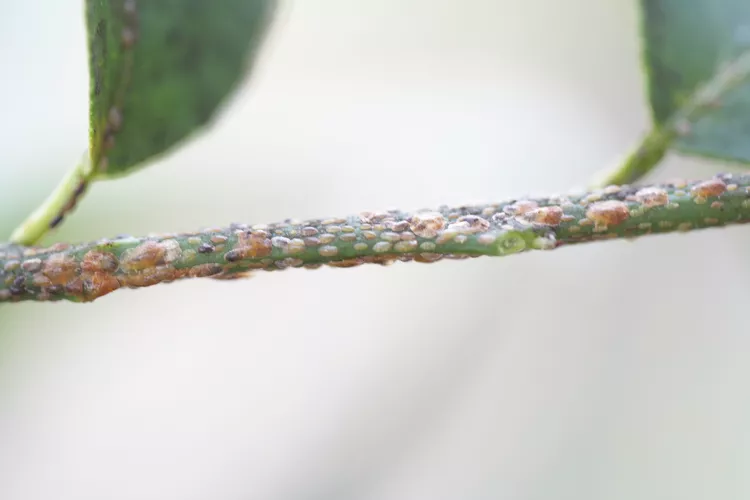
Soft-bodied scale insects are a bit larger than hard-bodied scale, but both types of scale typically measure about 1/8 to 1/16 inches long. Soft-bodied scale sometimes look fluffy, like tiny white cotton balls, while hard-bodied scale have waxy, domed shells that protect their delicate bodies. Scales come in an assortment of colors, including white, gray, brown, tan, and yellow, and their muted tones help them blend into plant leaves and stems.

Compared to other bugs, scale don’t move far and most species are stationary as adults. However, during their nymph or crawler stage, scale insects can move between plants, which is particularly problematic if the pests invade houseplant collections.

Identifying a Scale Infestation

Because scale insects are so small, many gardeners don’t realize that they’re dealing with a scale problem until infestations spread so much that they're obvious. Often, scale insects are confused with the natural bumps that appear on the stems of certain plants. However, unlike natural plant bumps, scale can be easily scraped off plant leaves with your fingernails.

In general, scale insects target plant leaves and stems, but they often congregate on the undersides of plant leaves and around plant leaf veins. Be sure to check these areas carefully if you suspect scale have invaded your plants and be on the lookout for sticky “honeydew,” which soft-bodied scale release as they feed. As infestations progress, you may also notice signs of stress in affected plants, such as leaf discoloration, leaf drop, and stunted growth.

How to Get Rid of Scale Insects

Scale insects reproduce rapidly and they spread quickly during their crawler phase, so it’s important to act fast if you spot scale on your plants.

Scale on Houseplants

If you see scale on your houseplants, isolate the infected plants immediately and prune away any leaves that are badly infested with scale. Small infestations of scale can be treated by dipping a cotton swab in rubbing alcohol and dabbing the alcohol over any scale you see. However, if you have a large infestation of scale, you’ll have better luck treating plants with an organic insecticidal spray.

Soap sprays and neem oil sprays usually work well for mealybugs and other soft-bodied scales, but organic horticultural oil sprays work better for armored scale. Sprays should be applied every 7 to 10 days until all signs of scale have vanished and you’ll want to apply sprays in the evening so plants don’t develop sunburn.

Scale on Fruit Trees or Outdoor Plants

If scale have invaded your fruit trees or outdoor garden, you have several options. One option is to release beneficial insects, such as predatory wasps, ladybugs, and lacewings, near affected plants. These predatory insects naturally feed on scale and they can make short work of these pests.

Another option is to treat affected plants with organic horticultural oil sprays. These products should be applied when plants are dormant in winter, or in late winter to early summer when scale nymphs are most active.

How to Prevent Scale Insects

While scale insects can be removed using natural treatment methods, it’s much easier to prevent scale from invading your plants in the first place.

Most of the time, scale invade houseplant collections by hitching a ride on new plants you bring home. To avoid this, always check plants over carefully and quarantine new arrivals for several weeks before you add them to your collection. Houseplants can also sometimes be infected with scale if they’re kept outside during the summer, so you may want to spray your plants preventatively with horticultural oil before bringing them back indoors.

In outdoor gardens, scale insects can be kept at bay with companion planting. Growing strongly scented herbs as well as flowers in the Umbellifer family (such as parsley, dill, and Queen Anne’s lace) near plants that are favored by scale insects can attract ladybugs, lacewings, and other insects that feed on scale. It’s also good practice to keep plants as healthy as possible by providing them with a proper balance of water, fertilizer, and sunlight. Happy plants can naturally resist many plant diseases and pests, including scale.
Frequently Asked Questions

  • Why are scale insects difficult to control?

    Scale insects are covered in a thick, waxy coating, which makes them resistant to some pesticides. Hard-bodied scale are particularly well armored, but even these pests are vulnerable to horticultural oil and rubbing alcohol.

  • Does vinegar get rid of scale on plants?

    Vinegar sprays can sometimes work on soft-bodied scale, but they aren’t effective against armored scale insects. If you choose to use vinegar sprays, be sure to dilute the vinegar with water and add a few drops of Castile soap to help the mixture adhere to plant leaves.

  • Does scale live in soil?

    Scale insects don’t live in soil, but nymphs can sometimes crawl around soil as they look for a place to feed. If you’re struggling with a bad infestation of scale on your houseplants, you may want to repot your plants in fresh soil or spray a bit of horticultural oil on the soil line to keep scale nymphs from spreading.

Related Article

Growing Tomatoes Upside Down—Here's What You Need to Know
1.5K
92
13

Growing Tomatoes Upside Down—Here's What You Need to Know

An upside down tomato planter can be a fun way to grow tomatoes. Get essential tips for growing tomatoes upside down, including the best container to use, types of tomatoes to grow, and how to care for your plants.
How to Grow Catnip Indoors and Outdoors
40.4K
2.8K
1.3K

How to Grow Catnip Indoors and Outdoors

Catnip is a simple herb to grow indoors and outdoors. Here's how to grow catnip and provide proper care so the plant thrives.
How to Plant a Wheelbarrow Fairy Garden
12.7K
885
283

How to Plant a Wheelbarrow Fairy Garden

Create a charming miniature landscape in a vintage wheelbarrow that you can move about as you like.
26 Tiny Plants Perfect for Miniature Landscaping
47.6K
2.9K
1.4K

26 Tiny Plants Perfect for Miniature Landscaping

Create a miniature plant garden by finding out how to pot your tiny plants based on light and zone. See our list of small plants perfect for your containers.
36 Container Garden Ideas to Inspire Your Own Pretty Plantings
21.5K
1.1K
172

36 Container Garden Ideas to Inspire Your Own Pretty Plantings

Use these container garden ideas to create the best-designed planter for your patio, window box, or other container planting.
8 Colorful Flowering Shrubs to Grow for Cut Flowers
9.3K
370
118

8 Colorful Flowering Shrubs to Grow for Cut Flowers

These flowering shrubs not only look gorgeous in your garden, but their flowers can fill your vases for weeks.
How to Plant and Grow Poplar Trees
42.9K
3K
1.5K

How to Plant and Grow Poplar Trees

Straightforward details about planting and growing several types of poplar trees.
19 Flowering Succulents to Grow for Their Stunning Blooms
44.1K
4.4K
926

19 Flowering Succulents to Grow for Their Stunning Blooms

These flowering succulents will fill your home and garden with colorful petals, and most are easy to grow.
4 Expert Tips for When and How to Cut Tulips in Your Garden
14.2K
1.4K
254

4 Expert Tips for When and How to Cut Tulips in Your Garden

Find out when and how to cut tulips and the best way to care for them so they last as long as possible.
How to Grow and Care for Satin Pothos
28.3K
2.3K
565

How to Grow and Care for Satin Pothos

Satin pothos is a popular vining houseplant that loves bright, indirect light. Place it on a mantel, shelf, or desk, and let the vines cascade.
Why Are My Plant’s Leaf Tips Brown? Here Are 3 Possible Reasons
41.6K
2.9K
1.1K

Why Are My Plant’s Leaf Tips Brown? Here Are 3 Possible Reasons

When foliage looks dry and there are brown tips on plants, it’s a warning sign that something needs to change with your care regimen. Here’s how to troubleshoot the problem and prevent it from happening in the first place.
This Bold Shade Garden Plan Brims with Color and Texture
5.4K
483
86

This Bold Shade Garden Plan Brims with Color and Texture

This bold shade garden plan contains gorgeous foliage and flowers that don't need a lot of sun.
This Cold-Climate Shade Garden Plan Features Colorful Perennials
37.5K
1.1K
112

This Cold-Climate Shade Garden Plan Features Colorful Perennials

Even if your winters bring sub-zero temperatures, the tough plants in this simple design will help you spice up a shady spot in your yard.
How to Keep Chipmunks Out of the Garden—and Squirrels, Too
5.6K
389
58

How to Keep Chipmunks Out of the Garden—and Squirrels, Too

Here's how to keep chipmunks out of your garden and stop them (and squirrels) from eating your plants and flowers.
12 Plants with Colorful Leaves for Brightening Up Your Garden
7.5K
525
78

12 Plants with Colorful Leaves for Brightening Up Your Garden

These annuals, perennials, vines, and shrubs have colorful leaves that won't fade like flowers.
18 Native Plants with Year-Round Interest for a Continuously Beautiful Garden
17.4K
1.4K
334

18 Native Plants with Year-Round Interest for a Continuously Beautiful Garden

These native plants help keep your gardening looking good through the seasons.
What Is a Permaculture Garden? Plus 12 Tips for Planting Your Own
30K
1.8K
287

What Is a Permaculture Garden? Plus 12 Tips for Planting Your Own

With these 12 tips on how to grow a permaculture garden, you can streamline garden chores, improve the soil, and grow healthier plants.
Use a Color Wheel to Plan Your Garden
35.7K
356
178

Use a Color Wheel to Plan Your Garden

Create a flower color wheel for your garden as you explore your plant color palette. It's the perfect meeting of gardening and decor! We'll help you discover how to use complementary, analogous, cool, warm colors, and more!
Visiting the Better Homes & Gardens Test Garden®
29.1K
873
279

Visiting the Better Homes & Gardens Test Garden®

The BHG Test Garden is a beautiful green space that has something to see in all seasons.
6 Must-Know Tips for Buying Garden Seeds to Grow Veggies and Flowers
1.9K
131
14

6 Must-Know Tips for Buying Garden Seeds to Grow Veggies and Flowers

When buying garden seeds, use these tips to make smart selections from seed catalogs and garden stores.