7 Steps for Planting Bare Root Trees in Your Yard

45.2K
904
379
2025-11-16
7 Steps for Planting Bare Root Trees in Your Yard

Many types of trees such as apples and oaks are sold as bare root trees. Before investing in one, it's important to know that planting a bare root tree is a little different than planting a tree growing in a pot. A bare root tree requires a little special care but they offer several advantages that make them a smart choice. Here's what to know about bare root trees to successfully grow them and the essential steps to follow to properly plant one in your yard.

What Is a Bare Root Tree?

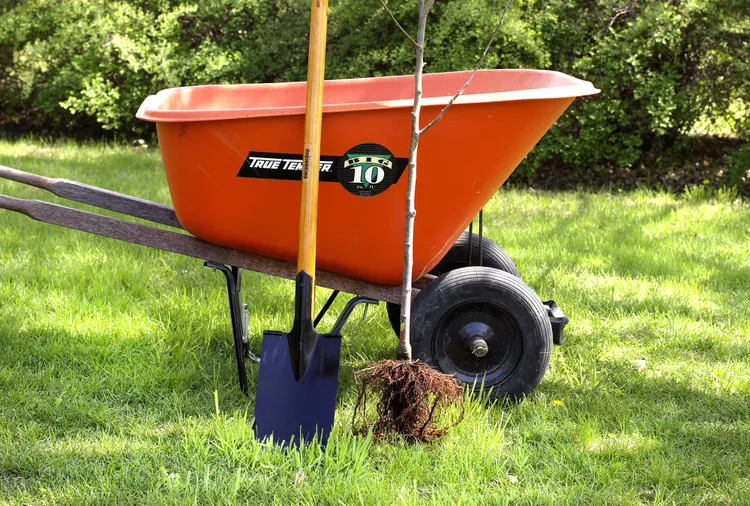
Rather that growing in a pot, bare root trees are exactly what they sound like—a mass of bare, or soilless, roots below a sturdy trunk and bare branches. Grown in a nursery field and dug up in early spring before their leaves emerge, bare root trees are delivered to your local garden center or shipped to your door at the best planting time. Their minimal weight and general ease of handling makes bare root trees less expensive than similar sized trees in growing in containers.

What to Do Before Planting

How you care for bare root trees before they are planted in the landscape is just as critical as their after-planting care. Bare root trees are harvested and shipped while they are still in their winter dormancy. The key to success is keeping the trees in this dormant state until they are ready for planting. Adequate moisture and just-right cool temperatures keep trees dormant.

If possible, plant bare root trees as soon as you receive them. These trees are stored in huge refrigerators at the mail order nursery or your local nursery before you receive them. The short transition time from the refrigerator to your house has likely spurred the trees to begin growing. Aim to get the trees in the ground right away.

If weather conditions or life circumstances prevent immediate planting, store your bare root tree at 40°F. An unheated garage or root cellar might be a good storage place. Keep the trees wrapped in moist, but not wet, packing material. Mail order trees can remain in their shipping material. Locally purchased trees can be wrapped in moistened newspaper. Do not allow the trees to dry out.

How to Plant Bare Root Trees

Planting bare root trees is easy to do, but there are essential steps to follow for success. These include hydrating the trees before planting and then establishing the proper planting depth.

1. Begin with a soak.

Soak tree roots in a bucket of water for one or two hours. Any longer than two hours and the roots can become depleted of oxygen so set a timer. While the tree is soaking, prune off any broken or damaged branches.

2. Dig a planting hole.

When you are ready to plant your bare root tree, dig a hole that is two times as wide as the tree’s root system. The depth of your planting hole is determined by the distance from the tree’s trunk flare—the swelling at the base of the trunk where roots emerge—to the bottom of the tree’s roots.

The best planting hole cannot overcome a poor planting location. Match the tree’s preferred growing conditions with the ideal spot in your landscape. And don't forget to take the mature size of the tree into account. A 4-foot-tall bare root maple tree will mature into a tree that is 30 feet tall or more and potentially as wide.

3. Make a cone in the center of the hole.

Using excavated soil, create a cone-shaped mound in the center of the planting hole. The mound of soil will support the tree's roots. Place the tree on the top of the mound, spreading the roots over the soil. The trunk flare—the swelling at the base of the trunk where the roots begin to emerge—should be even with the soil surface. Adjust the soil mound as needed.

4. Backfill with soil from the planting hole.

Fill in around your bare root tree with the excavated soil, firming it around the tree’s roots as you go. Don't add compost or other amendments.

5. Build a shallow basin and add mulch.

Using your garden soil, build a 3-inch-tall ring around the root zone to form a shallow basin. This ring will help hold water so it can slowly soak into the root zone. Spread a 2-inch-thick layer of mulch over the root zone, making sure the mulch doesn't touch the trunk of your tree.

6. Add a stake.

Newly planted bare root trees frequently need a stake to stabilize them until they can grow new roots. Sink a sturdy wood or metal stake two to three feet into the undisturbed soil outside the tree’s root zone. Use strong, wide strips of canvas or rubber to support the tree. Remove the staking material in the second growing season.

7. Provide plenty of water.

Finally water your newly planted tree deeply. Provide about 5 gallons of water at planting time, delivered slowly so water has time to soak down into the soil. Then, check the tree once or twice a week and water it when the soil around the roots is dry. Supplemental watering is usually needed through the first growing season. Continue watering in year two and three if conditions are dry.
Related Article

Growing Tomatoes Upside Down—Here's What You Need to Know
1.5K
92
13

Growing Tomatoes Upside Down—Here's What You Need to Know

An upside down tomato planter can be a fun way to grow tomatoes. Get essential tips for growing tomatoes upside down, including the best container to use, types of tomatoes to grow, and how to care for your plants.
How to Grow Catnip Indoors and Outdoors
40.4K
2.8K
1.3K

How to Grow Catnip Indoors and Outdoors

Catnip is a simple herb to grow indoors and outdoors. Here's how to grow catnip and provide proper care so the plant thrives.
How to Plant a Wheelbarrow Fairy Garden
12.7K
885
283

How to Plant a Wheelbarrow Fairy Garden

Create a charming miniature landscape in a vintage wheelbarrow that you can move about as you like.
26 Tiny Plants Perfect for Miniature Landscaping
47.6K
2.9K
1.4K

26 Tiny Plants Perfect for Miniature Landscaping

Create a miniature plant garden by finding out how to pot your tiny plants based on light and zone. See our list of small plants perfect for your containers.
36 Container Garden Ideas to Inspire Your Own Pretty Plantings
21.5K
1.1K
172

36 Container Garden Ideas to Inspire Your Own Pretty Plantings

Use these container garden ideas to create the best-designed planter for your patio, window box, or other container planting.
8 Colorful Flowering Shrubs to Grow for Cut Flowers
9.3K
370
118

8 Colorful Flowering Shrubs to Grow for Cut Flowers

These flowering shrubs not only look gorgeous in your garden, but their flowers can fill your vases for weeks.
How to Plant and Grow Poplar Trees
42.9K
3K
1.5K

How to Plant and Grow Poplar Trees

Straightforward details about planting and growing several types of poplar trees.
19 Flowering Succulents to Grow for Their Stunning Blooms
44.1K
4.4K
926

19 Flowering Succulents to Grow for Their Stunning Blooms

These flowering succulents will fill your home and garden with colorful petals, and most are easy to grow.
4 Expert Tips for When and How to Cut Tulips in Your Garden
14.2K
1.4K
254

4 Expert Tips for When and How to Cut Tulips in Your Garden

Find out when and how to cut tulips and the best way to care for them so they last as long as possible.
How to Grow and Care for Satin Pothos
28.3K
2.3K
565

How to Grow and Care for Satin Pothos

Satin pothos is a popular vining houseplant that loves bright, indirect light. Place it on a mantel, shelf, or desk, and let the vines cascade.
Why Are My Plant’s Leaf Tips Brown? Here Are 3 Possible Reasons
41.6K
2.9K
1.1K

Why Are My Plant’s Leaf Tips Brown? Here Are 3 Possible Reasons

When foliage looks dry and there are brown tips on plants, it’s a warning sign that something needs to change with your care regimen. Here’s how to troubleshoot the problem and prevent it from happening in the first place.
This Bold Shade Garden Plan Brims with Color and Texture
5.4K
483
86

This Bold Shade Garden Plan Brims with Color and Texture

This bold shade garden plan contains gorgeous foliage and flowers that don't need a lot of sun.
This Cold-Climate Shade Garden Plan Features Colorful Perennials
37.5K
1.1K
112

This Cold-Climate Shade Garden Plan Features Colorful Perennials

Even if your winters bring sub-zero temperatures, the tough plants in this simple design will help you spice up a shady spot in your yard.
How to Keep Chipmunks Out of the Garden—and Squirrels, Too
5.6K
389
58

How to Keep Chipmunks Out of the Garden—and Squirrels, Too

Here's how to keep chipmunks out of your garden and stop them (and squirrels) from eating your plants and flowers.
12 Plants with Colorful Leaves for Brightening Up Your Garden
7.5K
525
78

12 Plants with Colorful Leaves for Brightening Up Your Garden

These annuals, perennials, vines, and shrubs have colorful leaves that won't fade like flowers.
18 Native Plants with Year-Round Interest for a Continuously Beautiful Garden
17.4K
1.4K
334

18 Native Plants with Year-Round Interest for a Continuously Beautiful Garden

These native plants help keep your gardening looking good through the seasons.
What Is a Permaculture Garden? Plus 12 Tips for Planting Your Own
30K
1.8K
287

What Is a Permaculture Garden? Plus 12 Tips for Planting Your Own

With these 12 tips on how to grow a permaculture garden, you can streamline garden chores, improve the soil, and grow healthier plants.
Use a Color Wheel to Plan Your Garden
35.7K
356
178

Use a Color Wheel to Plan Your Garden

Create a flower color wheel for your garden as you explore your plant color palette. It's the perfect meeting of gardening and decor! We'll help you discover how to use complementary, analogous, cool, warm colors, and more!
Visiting the Better Homes & Gardens Test Garden®
29.1K
873
279

Visiting the Better Homes & Gardens Test Garden®

The BHG Test Garden is a beautiful green space that has something to see in all seasons.
6 Must-Know Tips for Buying Garden Seeds to Grow Veggies and Flowers
1.9K
131
14

6 Must-Know Tips for Buying Garden Seeds to Grow Veggies and Flowers

When buying garden seeds, use these tips to make smart selections from seed catalogs and garden stores.