Plant and grow sourwood (Oxydendrum arboreum) in your yard, and you'll be rewarded with a small-to-medium-sized deciduous tree with multiple seasons of interest. It features glossy green leaves, tassels of bell-shaped, white flowers in summer, and spectacular autumn color. Even in winter, its deeply fissured dark gray bark stands out in the landscape.
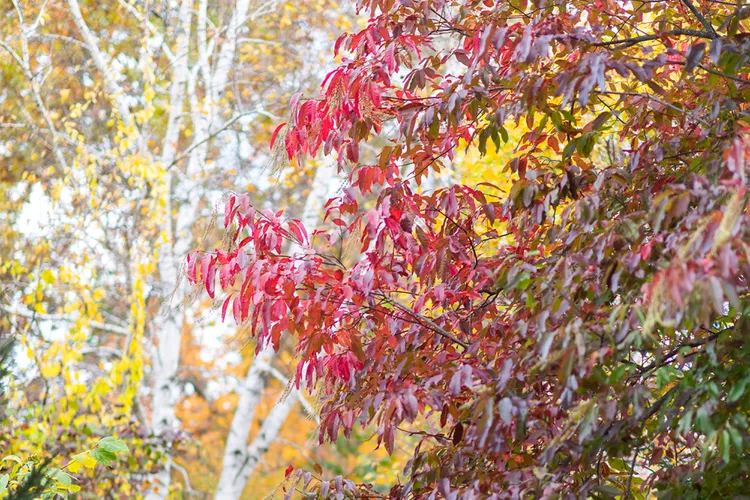
Native to the eastern United States, sourwood has a slender habit with a rounded top and somewhat drooping branches. The sourwood gets its name from the sour-tasting leaves. However, its flowers are the source of extremely sweet nectar, which bees gather to make highly prized sourwood honey. The flowers are followed by yellow-green seed capsules that are almost as attractive as the blooms. It’s among the first trees to display fall color; its leaves change to scarlet, dark red, and orange, in stunning contrast to the seed capsules.
This tree can be tricky to find at a nursery, but it’s well worth the search. Use this guide to find out how to plant and grow a sourwood in your yard.
Sourwood Overview
| Genus Name | Oxydendrum arboreum |
| Common Name | Sourwood |
| Additional Common Names | Lily-of-the-Valley tree, Sorrel tree |
| Plant Type | Tree |
| Light | Part Sun, Sun |
| Height | 20 to 40 feet |
| Width | 15 to 25 feet |
| Flower Color | White |
| Foliage Color | Blue/Green, Purple/Burgundy |
| Season Features | Colorful Fall Foliage, Summer Bloom |
| Special Features | Attracts Birds, Low Maintenance |
| Zones | 5, 6, 7, 8, 9 |
| Propagation | Seed |
| Problem Solvers | Deer Resistant |
Where to Plant Sourwood Trees
In the wild, sourwood is an understory tree that often grows in shade. However, deep shade results in few flowers and less dramatic fall foliage color. In a home landscape, place it in full sun or part shade. Make sure it will have adequate space to reach its mature size without encroaching on buildings or other plants. It does not tolerate air pollution, so avoid planting sourwood near a busy street.
How and When to Plant a Sourwood Tree
It's best to buy a smaller sapling because larger trees are trickier to transplant. Be sure to site the tree where you want it because sourwoods don’t like to be moved after being planted.
Plant while the tree is dormant—in spring before new growth emerges or in fall after leaves have dropped. If your soil needs any amendments, such as organic matter or a soil acidifier) mix these in before planting. Dig a hole about a foot wider and the same depth as the root ball, and mound some soil in the center of the hole.
Examine the roots and remove any that appear damaged. Set the tree in the hole on top of the center mound and spread the roots out evenly. Gradually backfill with soil, tamping it down and watering to settle it around the roots as you fill the hole. When you finish backfilling, the tree should sit slightly higher than it did in the pot. Apply 3 or 4 inches of organic mulch around the planting area, but keep the mulch a few inches away from the trunk of the tree. Water the tree thoroughly.
Sourwood Tree Care Tips
Once established, sourwood requires minimal care. It’s not a fussy tree, and it has few serious pests or diseases. As long as you site it well and keep it watered for its first two years, it should reward you with many seasons of understated elegance with its summer flowers and eye-catching fall foliage.
Light
Although it grows wild in full shade as an understory tree, sourwood will be much more spectacular in your landscape if it receives more light. Full sun is best, but it does well in part shade, particularly if it receives at least four hours of preferably morning sun or all-day dappled shade. These conditions should ensure good flowering and brilliant fall color.
Soil and Water
Sourwood thrives in moist, well-drained soil with high organic matter content. Like other members of the Ericaceae family, such as azaleas and rhododendrons, sourwood prefers acidic soil in a pH between 4.5 and 6.0. Sourwood does not tolerate compacted or alkaline soil or poor drainage.
Newly planted sourwoods should be watered deeply every week during their first two growing seasons. These trees can be slow to recover from transplanting, so regular watering is critical until they are well established. After that, they tolerate some drought.
Temperature and Humidity
Sourwood trees grow in USDA Zones 5-9 and thrive in cool, upland environments. They can be found in the wild growing on wooded slopes or along streambanks in the Appalachian Mountains. They don’t withstand intense heat; extended warm, dry periods often cause leaves to drop.
Fertilizer
If your soil has high organic matter content, you don’t need to fertilize for the first two years. After that, spread a layer of leaf mold or compost around the dripline of the tree, then cover this layer with mulch.
Pruning
Little pruning is necessary with sourwoods as they have a pleasing natural habit. You may occasionally need to remove a damaged or broken branch, which can be done whenever you notice it. If you want to prune your tree to establish a particular shape or reduce its size, prune in late fall after the leaves have dropped.
Pests and Problems
Few pests or diseases bother sourwood, and those that do rarely cause significant damage, which is another good reason to grow it. Fall webworms occasionally infest a sourwood; these can be removed by cutting off the branch on which they form their web. Leaf spot disease occurs infrequently and causes minor damage.
How to Propagate Sourwood
The best method of propagating sourwood is by seed, and it requires a lot of patience. Cuttings are notoriously difficult to root. The seed is tiny and must be collected in the fall from the ripened seed capsules. Sow it in acidic soil, such as a mixture of peat moss and sand, and keep it consistently moist, either under mist or in a plastic tent. Subjecting the seed to a period of cold temperatures (known as stratification) for a couple of months may hasten germination. It will be several years before the seedlings are large enough to transplant into the garden.
Types of Sourwood Trees
Sourwood is the only species in the genus Oxydendrum, and there are only a few named varieties.
‘Albomarginatum’
Oxydendrum arboreum ‘Albomarginatum’ sports green leaves with white margins. Some leaves are marbled with white. Its fall color is spectacular.
‘Chameleon’
‘Chameleon’ is a rare cultivar that grows with a more upright and conical habit than the other species. Its fall foliage shows color early as it morphs into bright shades of yellow, red, and purple, all at the same time or in sequence.
‘Mt. Charm’
This cultivar has a symmetrical, conical habit. It is the earliest sourwood tree to display brilliant fall foliage color.
Sourwood Companion Plants
Shrubs that thrive under the same conditions as sourwood are natural companions in a dappled or partly shady garden. Many often grow nearby in the wild.
Flame Azalea
Flame azalea (Rhododendron calendulaceum) is one of many azaleas that add a spring flower display to a garden in dappled sun or part shade. It produces large clusters of red, orange, or yellow flowers in the spring.
Drooping Leucothoe
Drooping leucothoe (Leucothoe fontanesiana), also known as doghobble, thrives in the same conditions preferred by the sourwood. It is a shrubby evergreen groundcover with reddish new growth that turns deep green. It produces small, creamy white spring-to-summer flowers.
Carolina Allspice
Carolina allspice (Calycanthus floridus) is another native shrub that grows near sourwood in the wild. It’s a 4-to-8-foot-tall shrub that bears unusual fragrant deep burgundy spring flowers. Its yellow fall foliage contrasts beautifully with the red and orange autumn leaves of sourwood.